
Imagine two versions of your retirement.
In the first, you wake each morning with a quiet knot of anxiety about money. You watch every penny. You hesitate before booking a flight. You cancel the dinner out because the numbers don’t quite add up. You are technically retired but you are not free.
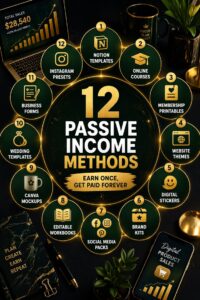 In the second version, you wake without that knot. Enough money arrives each month, without you doing a thing, to fund not just your needs but your wants – the holiday, the occasional treat, the ability to help your family when they need it.
The difference between those two retirements is not luck. It is not inheritance.
It is one thing: passive income, built deliberately, over time.
But here is the question that most retirement guides dance around rather than answer directly: exactly how much passive income do you need, on top of the State Pension, to cross the line from surviving into genuinely comfortable?
The answer exists. It is specific. And by the time you finish reading this, you will know it – and know what to do about it.
Discover What Internet Business is Right For You!
The Myth That the State Pension Is Enough
There is a widespread, quietly dangerous assumption among working-age adults in the UK: that the State Pension will take care of them when they stop working. That if they just pay their National Insurance contributions for long enough, retirement will sort itself out.
It will not.
As of April 2026, the full new State Pension pays £241.30 per week – which amounts to £12,548 per year. For those who reached pension age before April 2016 on the older basic State Pension, the figure is even lower: £184.90 per week, or £9,615 annually.
Let that number settle for a moment. £12,548 per year. That works out to roughly £1,046 per month before any other income. In a country where the average household energy bill alone has surged through the cost-of-living crisis, where food inflation has reshaped supermarket trolleys, and where even a modest UK holiday can cost upwards of £800 – £1,046 a month is not a comfortable retirement. It is, at best, a careful one.
And yet, this is the only guaranteed income that millions of Britons are actively planning around. According to the Pensions Policy Institute’s 2025 modelling, the moderate and comfortable PLSA retirement standards are unattainable for the majority of the UK population – even when housing and other income sources are factored in.
That statistic should concern anyone who believes their pension will carry them.
| STATE PENSION REALITY CHECK (2026/27)
Full New State Pension: £241.30/week = £12,548/year Full Basic State Pension (pre-2016 retirees): £184.90/week = £9,615/year State Pension age: currently 66, rising to 67 between 2026–2028 NI qualifying years required for full new State Pension: 35 years Triple lock rise in April 2026: 4.8% (driven by earnings growth) |
What a Comfortable Retirement Actually Costs in 2026
To answer the question of how much passive income you need, we first need a precise definition of ‘comfortable’. Thankfully, one exists.
Every year, the Pensions and Lifetime Savings Association (PLSA), working with the Centre for Research in Social Policy at Loughborough University, publishes its Retirement Living Standards. These are not theoretical projections – they are built from detailed research with real people across the UK, describing what each standard of living actually feels like.
The 2025 update (the most current benchmarks in use for 2026 planning) defines a comfortable retirement for a single person as requiring £43,900 per year after tax. For a two-person household, the figure is £60,600.
What does £43,900 buy you in retirement?
- A fortnight’s four-star holiday in the Mediterranean each year, plus several long UK weekend breaks
- A newer small car (around three years old)
- Around £75 per week on groceries, £42 per week eating out
- Regular leisure spending – theatre, days out, hobbies
- The budget to treat friends and family, and handle unexpected costs without stress
- Broadband, subscriptions, and £1,548 per year on clothing and footwear
It is not extravagant. It is not a villa in Tuscany or a yacht in the Solent. It is simply a decent, dignified, enjoyable life – one that most working adults would be perfectly happy with.
The moderate lifestyle benchmark – £31,700 per year – offers a step down: a two-week European holiday rather than four-star, a smaller car, less dining out. Still pleasant. Still more than the State Pension alone can deliver.
And even the minimum standard – £13,400 per year – already exceeds the full State Pension by £852 annually.
The Passive Income Gap: What You Actually Need Beyond the State Pension
|
Lifestyle Standard |
AAnnual Income Needed |
State Pension (2026/27) |
Passive Income Required |
|
Minimum |
£13,400 |
£12,548 |
~£852 |
|
Moderate |
£31,700 |
£12,548 |
~£19,152 |
|
Comfortable |
£43,900 |
£12,548 |
~£31,352 |
Sources: PLSA Retirement Living Standards 2025 | DWP / People’s Pension State Pension 2026/27
Your Real Retirement Target: £31,352 Per Year in Passive Income
Let us be precise.
If you want a comfortable retirement as defined by the PLSA – the kind with a proper holiday, a car, meals out, and genuine financial flexibility – and you receive the full new State Pension of £12,548 per year, you need an additional £31,352 per year from passive income sources.
Broken down, that is £2,613 per month of passive income flowing into your account, reliably, every month, without you having to work for it.
Does that number sound daunting? Good. Because acknowledging the real figure – rather than a vague, comfortable illusion – is the first step to actually achieving it.
Here is the thing about £2,613 per month: it is not one enormous target. It is five income streams of around £520 each. It is three streams of around £870 each. It is a dividend portfolio and an affiliate income and a SIPP drawdown, working together. When you see it as a system rather than a single impossible number, it becomes a plan.
The Passive Income Streams That Can Close the Gap
The most effective retirement passive income strategies combine several complementary streams, each contributing a portion of the monthly target whilst managing risk through diversification.
Dividend Investing Inside a Stocks and Shares ISA
A portfolio of dividend-paying shares and funds, sheltered inside a Stocks and Shares ISA, is one of the most powerful tools available to UK retirement planners. The ISA wrapper means all dividends and capital growth are completely free of income tax and CGT – for life.
A well-diversified dividend portfolio yielding 4–5% annually on £400,000 in investments generates £16,000–£20,000 per year tax-free. That alone covers more than half the comfortable retirement passive income gap. And with the ISA allowance of £20,000 per year, diligent investors can build that portfolio over 15–20 years of consistent contributions.
Affiliate Marketing and Digital Product Revenue
This is the passive income stream that most traditional financial planners overlook – and yet for thousands of UK entrepreneurs and content creators, it is the most scalable income available.
By building content – blog posts, YouTube channels, email newsletters – around high-value affiliate partnerships and digital products, it is possible to create income that compounds over time without a proportional investment of hours. A content site with solid SEO and a good affiliate programme can generate £1,000–£3,000 per month in recurring commissions, years after the foundational content was created.
Platforms like Systeme.io make this infrastructure accessible to anyone: automated funnels, email sequences, digital product delivery, and affiliate tracking – all in one place, without technical complexity. When your content and your funnel are working, income arrives whether or not you are sitting at a desk.
Private Pension (SIPP) Drawdown
Your Self-Invested Personal Pension is not just a savings vehicle – it is a retirement income engine. Using the sustainable 4% drawdown rule, a SIPP pot of £500,000 can generate £20,000 per year in income across a 30-year retirement without depleting the capital. Combined with the State Pension, that alone delivers a total retirement income of over £32,500 – close to the moderate standard.
Crucially, SIPP contributions attract tax relief at your marginal rate – meaning a basic-rate taxpayer who puts £800 into their SIPP receives a £200 government top-up automatically, making it one of the most efficient wealth-building vehicles available.
Property Income: Buy-to-Let and REITs
Net rental income from buy-to-let property remains a meaningful retirement income source for many UK investors, with typical net yields of £700–£1,200 per month per property depending on location and mortgage status. However, regulatory complexity – mortgage interest relief restrictions, Section 24 tax treatment, stamp duty surcharges on additional properties – has reduced net returns for many landlords in recent years.
Real Estate Investment Trusts (REITs) offer an alternative route to property income without the management burden. London-listed REITs often yield 5–8% annually, paying distributions quarterly or semi-annually. Held within an ISA, that income is entirely tax-free.
Fixed Income: Bonds, Gilts, and Savings Products
For those closer to retirement seeking capital stability, UK government bonds (gilts), corporate bonds, and fixed-rate savings products now offer materially improved yields following the interest rate cycle of recent years. A ladder of gilts and investment-grade bonds yielding 4–6% can generate predictable, low-risk income with minimal ongoing management.
What Each Passive Income Stream Might Contribute
|
Passive Income Stream |
Est. Annual Yield |
Est. Monthly Income |
|
Dividend ISA (£400k @ 4.5%) |
£18,000 |
£1,500 |
|
Affiliate Marketing / Digital Products |
£12,000–£36,000 |
£1,000–£3,000 |
|
Buy-to-Let / REIT Portfolio |
£10,800–£16,800 |
£900–£1,400 |
|
SIPP Drawdown (£500k @ 4%) |
£20,000 |
£1,667 |
|
Bonds / Fixed Income |
£8,000–£14,000 |
£667–£1,167 |
Illustrative figures only. Actual returns will vary. Not financial advice.
Why Tax Efficiency Is the Multiplier Nobody Talks About
 Here is an insight that transforms retirement planning: the goal is not to maximise gross income. The goal is to maximise net income – what you actually keep after tax.
At a retirement income of £43,900, a single person would typically be liable for income tax on any earnings above the £12,570 personal allowance.
Without careful planning, a meaningful chunk of that passive income could disappear to HMRC before you even see it.
The solution is to structure your passive income strategically across tax wrappers before retirement:
- ISA first: invest as much as possible through your annual £20,000 Stocks and Shares ISA allowance. All income and growth here is permanently tax-free.
- SIPP for pension income: take advantage of 25% tax-free lump sum entitlement when drawing down. Sequence drawdown to stay within the personal allowance where possible.
- Use your dividend allowance: £500 per year in dividends outside an ISA is tax-free. Not enormous, but worth using.
- State Pension and the personal allowance: in 2026/27, the full new State Pension of £12,548 sits just below the £12,570 personal allowance – meaning most retirees receive their State Pension entirely tax-free, leaving the full allowance effectively intact.
- Business income via a limited company: for those generating affiliate or digital product income, structuring through a limited company and drawing dividends can significantly reduce tax liability compared to self-employment income.
A retiree who plans their income wrappers intelligently can, in many cases, receive the full comfortable retirement income of £43,900 while paying far less tax than the headline rates suggest – and sometimes none at all on the passive income portion.
Discover What Internet Business is Right For You!
Frequently Asked Questions
What amount of passive income is needed for a comfortable retirement in the UK in 2026?
Based on the PLSA Retirement Living Standards 2025 and the full new State Pension of £12,548 per year (2026/27), a single person needs approximately £31,352 per year – or around £2,613 per month – in passive income to reach the comfortable retirement threshold of £43,900. For a two-person household targeting the comfortable standard of £60,600, and with two full State Pensions totalling £25,096, the combined passive income gap is approximately £35,504 annually.
Can I use my ISA savings to generate retirement passive income?
Yes – and you should. A Stocks and Shares ISA is one of the most tax-efficient retirement income vehicles available. Dividends, interest, and investment growth inside an ISA are all free of income tax and capital gains tax, permanently. Maximising your ISA contributions (£20,000 per year) throughout your working life should be a cornerstone of any passive income retirement strategy.
Is the comfortable PLSA retirement standard achievable without a defined benefit pension?
Yes, though it requires deliberate planning. A combination of SIPP drawdown, Stocks and Shares ISA income, and supplementary passive income streams such as affiliate marketing or rental income can close the gap entirely. The key is starting early, diversifying income sources, and using tax wrappers efficiently.
Does the PLSA comfortable retirement figure include housing costs?
No. The PLSA Retirement Living Standards are calculated on the assumption that retirees are homeowners without a mortgage. They exclude rent and mortgage payments. Retirees who are still renting in retirement will need significantly higher income – potentially £5,000–£15,000 more per year depending on location – to achieve the same standard of living.
How does the State Pension triple lock affect retirement planning?
The triple lock has consistently grown the State Pension above inflation in recent years, with a 4.8% rise applied in April 2026. However, growing political pressure on its long-term sustainability means it would be unwise to rely on it remaining in its current form indefinitely. Treating the State Pension as a floor – not a ceiling – and building private passive income above it is the prudent approach.
The Compound Advantage: Why Starting Now Matters More Than Starting Big
Perhaps the most important thing to understand about passive income for retirement is the role of time.
A 40-year-old who begins investing £500 per month into a dividend-focused Stocks and Shares ISA, and simultaneously builds a modest affiliate income stream generating £300 per month, is not making a dramatic financial sacrifice. But over 25 years, with compounding returns of 6–7% annually and gradual scaling of the digital income, that relatively modest effort can produce a retirement income portfolio comfortably closing the £31,352 gap.
The same effort started at 55 produces a fraction of the result.
Compounding is not magic. It is mathematics. But it is mathematics that systematically rewards the person who acts early over the person who acts perfectly – which means the best time to begin building your passive income layer is not when you have the ideal strategy. It is now, with whatever resources you currently have, and a commitment to grow it over time.
| THE COMFORTABLE RETIREMENT FORMULA
State Pension (2026/27): £12,548/year PLSA Comfortable Standard (single): £43,900/year Passive Income Gap: £31,352/year (£2,613/month) Bridged by: Dividend ISA + SIPP Drawdown + Affiliate Income + Property/REITs Start early. Diversify intelligently. Use ISA and SIPP wrappers first. Review annually. Scale consistently. |
The Retirement You Deserve Is Not Given. It Is Built.
The State Pension is a foundation. It is not a finish line.
For the retirement that most people actually want – the one with freedom, flexibility, and the absence of financial anxiety – the gap between what the government provides and what a comfortable life costs is real, significant, and entirely bridgeable.
£31,352 per year. £2,613 per month. That is the number. Not a vague aspiration, but a precise income target, broken into achievable streams: a dividend portfolio compounding inside an ISA, a SIPP drawdown timed for tax efficiency, an affiliate income system built on knowledge you already have, perhaps a property asset or fixed-income allocation to smooth the picture.
None of those streams require you to be wealthy to start. They require you to be intentional, consistent, and willing to invest time and attention now in exchange for income later.
The two versions of retirement described at the top of this article are not separated by luck. They are separated by a decision – made years before retirement age – to stop leaving the future to chance and start building, stream by stream, the income that makes freedom possible.
That decision is available to you right now.
| TAKE THE NEXT STEP AT WIGNALEDWARDS.COM
Explore practical, no-fluff guidance on building every passive income stream covered in this article: • Affiliate marketing strategies and platform recommendations (including Systeme.io) • Digital product creation — from concept to automated recurring income • AI tools that accelerate your content business and audience growth • UK wealth-building, ISA and SIPP strategies, and retirement income planning • Entrepreneurship and personal development for the long game Visit wignaledwards.com and start building the passive income layer your retirement needs. |
Let Us Help You Grow
Fast, Easy & Effective Classified Ads | The Essentials in Leading Digital Marketing Training | The Best Budget SIM-Only Deals in the UK | Website Hosting Built for Success | Your Classified Ad Promoted to 1000’s+ Advertising Pages Each Month! | Run your business – leave the email marketing to us | Learn How to Set up, Rank Videos & Monetise your own YouTube Channel
Disclaimer: This article is for informational and educational purposes only and does not constitute regulated financial advice. Figures are based on publicly available PLSA and DWP data current at time of publication (May 2026). Always seek advice from a qualified financial adviser before making investment or pension decisions.