
The Honest Guide No One Gave You
Picture this. You’re sitting at a desk that isn’t yours, doing work that isn’t yours, watching someone else build wealth with your effort.
 Sound familiar?
Millions of people feel exactly that way every single day. And the frustrating part?
The knowledge to change it has always been available. Most people just never got it laid out plainly.
This post is the plain version.
Whether you’re thinking about starting a small business from scratch, or you’ve already got something going but it feels stuck, what follows is a practical, no-nonsense framework for moving forward.
No hype. No six-figure promises. Just the decisions, systems, and mindset shifts that actually move the needle.
So here’s the question worth sitting with: What would your life look like in three years if you took your small business seriously starting today?
Keep that in mind as you read on.
Why Most Small Businesses Struggle Before They Even Begin
The statistics around small business failure get quoted so often they’ve become almost meaningless. Yes, a significant percentage of businesses close within the first five years. But here’s what those statistics rarely tell you: most of those closures were not caused by a bad product or a bad market. They were caused by a bad starting position.
The most common reasons small businesses struggle from the outset include the following.
- Starting without a clear customer in mind
- Trying to offer everything to everyone
- Underpricing out of fear rather than strategy
- Treating the business like a hobby until it becomes one permanently
- Waiting for the perfect moment that never arrives
None of these are fatal on their own. Combined, they create a slow drift toward giving up. The good news is that every single one of them is fixable. But you have to see the problem clearly before you can solve it.
Ask yourself honestly: do you know exactly who you are selling to?
Not roughly. Exactly. A real person with a real problem who would genuinely benefit from what you offer. If you can’t describe that person in two sentences, you have some work to do before anything else.
The Foundation: What Your Business Actually Needs to Survive
There is a version of small business advice that talks endlessly about passion and purpose. That version is not useless, but it is incomplete. Passion does not pay invoices. Purpose does not cover payroll. What keeps a business alive is a system, and that system has four essential parts.
1. A Clear Offer
Your offer is not your product. Your offer is the outcome your customer gets and the reason it matters to them. “Social media management” is a product. “We handle your social media so you can focus on running your business and stop worrying about it” is an offer. One describes what you do. The other describes what the customer gets. Always lead with the second.
2. A Reliable Way to Find Customers
You need a repeatable process for bringing new potential customers into your world. This might be organic content on social media, a simple website with good SEO, word-of-mouth referrals built into your process, a local directory listing, or paid advertising once you have the cash flow to support it. The key word is repeatable. One viral post is luck. A system is a business.
3. A Simple Sales Process
Most small business owners hate the idea of selling. They think of it as pushy or manipulative. Real selling is neither. It is simply having a clear conversation with someone who has a problem, showing them that your offer solves it, and giving them an easy path to say yes. If your sales process has more than five steps, simplify it. Friction kills conversions.
4. Basic Financial Visibility
You do not need a complex accounting system on day one. You do need to know three numbers at all times: what is coming in, what is going out, and what the difference is. Every business decision you make will be better if it is grounded in those three numbers. Ignorance of your finances is not neutral. It is expensive.
Growing a Business That Is Already Running
If you already have a business operating but feel like it has plateaued or stalled, the growth conversation is different from the starting conversation. You are not building from nothing. You are optimising something that already exists.
The most effective growth levers for an established small business are usually simpler than people expect.
Go Deeper Before You Go Wider
The instinct when growth stalls is to add new products, new services, new markets. Resist it. Before you expand, look at what is already working and ask how you could serve those existing customers better.
Could you offer a premium tier?
A retainer?
A done-for-you version of something they currently do themselves?
Existing customers already trust you. That trust has a cash value. Use it.
Raise Your Prices
This is the growth lever that nobody wants to hear about and almost everyone needs. If you have not reviewed your pricing in the last twelve months, you are almost certainly undercharging. The fear of losing customers by raising prices is usually far larger than the reality. Done well, a price increase with a clear explanation of value is accepted by most loyal customers. The ones who leave were often the most difficult to serve anyway.
Build Your Email List
Social media platforms are borrowed ground. The algorithm changes. The reach drops. The account gets restricted. Your email list belongs to you. Every person who gives you their email address is telling you they want to hear from you. That list is one of the most valuable assets your business can own. Start building it now if you have not already, and treat every subscriber as a real person rather than a number.
Platforms like Systeme.io make this straightforward and affordable for small business owners, allowing you to build landing pages, capture leads, and automate follow-up sequences without needing a technical background.
Document What Works and Repeat It
Growth at scale requires systems. If you deliver a great result for a customer but cannot explain exactly how you did it, you have created value but not a business. Write down your process. Turn it into a checklist. Train someone else to deliver it. That is how a one-person operation becomes a real company.
Mindset: The Invisible Factor That Determines Everything
You can have the best product in your market, perfect positioning, and a clear system, and still self-sabotage your way into mediocrity. Mindset is not a fluffy concept reserved for motivational posters. It is the operating system that everything else runs on.
There are three mental patterns that derail small business owners more than any external factor.
Perfectionism disguised as preparation. Waiting until the website is perfect, the branding is finalised, or the product is fully polished. Nothing is ever fully polished. Ship it. Improve it. Repeat.
Comparison that kills momentum. Watching what competitors are doing and measuring your early stage against their mature stage. You are not behind. You are at a different chapter.
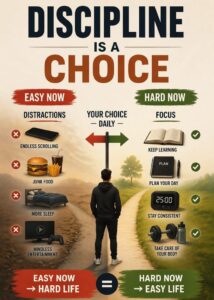
Inconsistency masquerading as flexibility. Doing the work only when motivation strikes. Motivation is unreliable. Discipline is the engine of a real business.
None of this means you need to be perfect. It means you need to be consistent. Show up for your business the way you would show up for an employer who was paying you well, because one day, if you do the work, it will be.
Digital Tools That Give Small Businesses a Real Advantage
 One of the genuine levellers of the modern business landscape is that the tools available to a solo operator today were, just twenty years ago, only accessible to large companies with large budgets.
That has changed dramatically.
Here are areas where small businesses can now compete effectively with much larger operations.
Content marketing and SEO. A well-written blog with targeted keywords can drive free, qualified traffic to your website for years without ongoing advertising spend.
Email automation. Set up once, deliver consistently. A well-structured automated email sequence can nurture a lead from curious visitor to paying customer without you being personally involved in every step.
AI tools for productivity. Tasks that once took hours can now be done in minutes. Research, drafting, summarising, brainstorming. The small business owner who learns to use AI tools effectively has a significant time advantage over those who do not.
Affiliate marketing as a secondary income stream. If you recommend tools and platforms to your audience anyway, getting paid a commission for those recommendations is a straightforward way to add revenue without adding workload.
Digital products. Knowledge you already have can be packaged into guides, templates, courses, or toolkits and sold repeatedly with no additional delivery cost.
The common thread across all of these is leverage. One piece of content, one email sequence, one digital product can work for your business around the clock. That is the kind of infrastructure worth building.
Your Next Ninety Days: A Simple Action Plan
The gap between knowing and doing is where most small business ambitions quietly die. So let’s make this concrete.
If you are starting a business in the next ninety days, focus on these three things exclusively.
Week one to four: Define your offer and your ideal customer. Write it down in plain language. Tell ten people about it and ask for honest feedback.
Week five to eight: Build the simplest possible way for people to find you and buy from you. A landing page. A social profile. A clear call to action.
Week nine to twelve: Get your first paying customer. Not a free client. Not a favour. A real transaction. Everything changes once money has changed hands.
If you are growing an existing business, your ninety days look different.
Identify the one offer that generates the most revenue with the least effort. Double your focus on it.
Review your pricing and make one increase this quarter.
Start or grow your email list with a simple lead magnet relevant to your audience.
Ninety days is long enough to build real momentum. It is short enough that the urgency is genuine. Start the clock now.
The business you want is closer than you think. The only distance between here and there is action.
Frequently Asked Questions
Q: How much money do I need to start a small business?
A: Far less than most people assume. Many service-based businesses can be started for under £500, sometimes for almost nothing. The real investment is time and focus. Start lean, validate your offer with real customers, and reinvest your first revenue before spending on anything non-essential.
Q: Do I need a business plan before I start?
A: Not a formal one. What you do need is clarity on four things: who you are serving, what problem you are solving, how you will reach those people, and how you will make money. Write those down in one page. That is your working plan. Revisit and refine it as you learn.
Q: How long does it take for a small business to become profitable?
A: Service businesses can reach profitability within three to six months with consistent effort. Product or e-commerce businesses typically take longer due to inventory and marketing costs. The timeline shortens significantly when you have a clear offer, a defined audience, and a consistent sales process.
Q: What is the biggest mistake new business owners make?
A: Trying to solve a problem nobody is paying to have solved. Before building anything, find evidence that real people are already spending money on the type of solution you plan to offer. That evidence is your green light.
Q: How important is social media for a small business?
A: It depends on your audience and offer. Social media is a traffic channel, not a business model. It can be powerful when used consistently with a clear strategy. But no platform should be your only channel. Build an email list, develop your own content on your own platform, and treat social media as a funnel, not a destination.
Q: Can I run a small business alongside my full-time job?
A: Yes, and for most people this is the sensible approach. Start part-time. Prove the model. Build cash flow. Once the business generates enough to replace your salary comfortably, make the transition. Quitting your job to ‘focus’ before you have revenue is a risk that is rarely necessary.
Final Thoughts
Starting or growing a small business is not a lottery. It is not about luck, timing, or having the right connections. It is about doing the unglamorous, consistent work of building something real, one decision at a time.
The people who succeed are not always the most talented or the most experienced. They are the ones who keep going when it is uncomfortable, who treat setbacks as information rather than verdicts, and who genuinely care about the people they are trying to serve.
You already have more than you think you do. What you need is a clear direction and the willingness to take the first step.
If this post has given you that clarity, even slightly, then it has done its job. Now go do yours.
About the Author
Wignal Edwards is a digital entrepreneur and business educator based in London. He writes about digital products, AI tools, affiliate marketing, and wealth-building for everyday people at wignaledwards.com.
Let Us Help You Grow
Fast, Easy & Effective Classified Ads | The Essentials in Leading Digital Marketing Training | The Best Budget SIM-Only Deals in the UK | Website Hosting Built for Success | Your Classified Ad Promoted to 1000’s+ Advertising Pages Each Month! | Run your business – leave the email marketing to us | Learn How to Set up, Rank Videos & Monetise your own YouTube Channel